
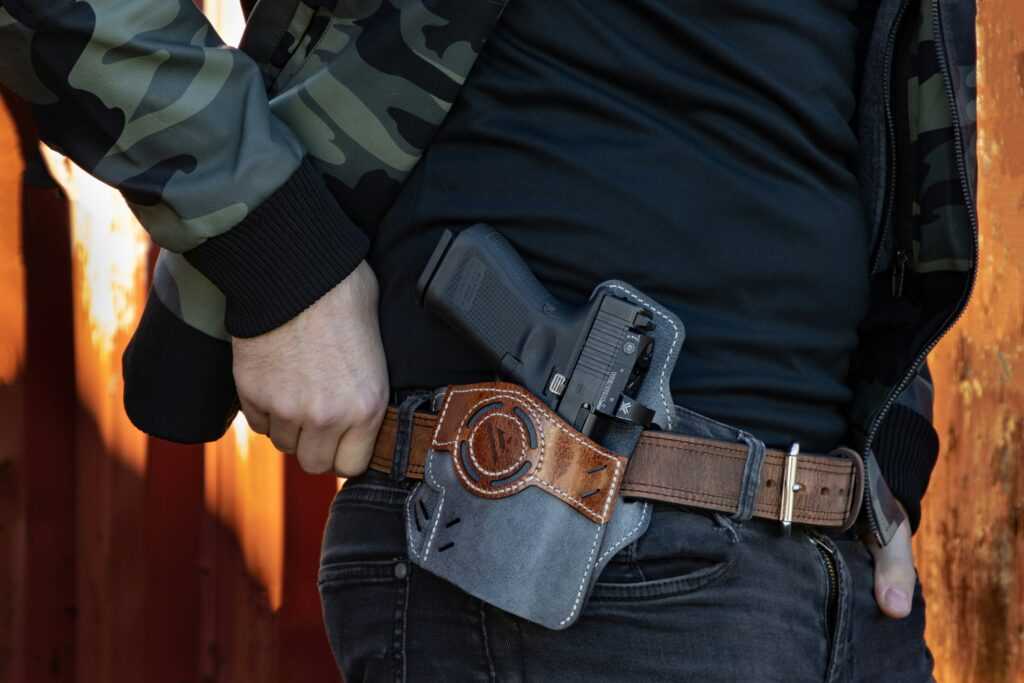
Concealed carry equipment has to work with the realities of everyday movement. A holster may look well made on a workbench, but its real value becomes apparent when it is worn while sitting, walking, driving, bending, and moving through ordinary routines. For many carriers, an inside-the-waistband design offers a practical balance between concealment and accessibility, while leather provides a traditional material known for its structure, comfort, and ability to develop a personalized fit over time.
Choosing the right holster therefore involves more than selecting a material or style. Waist position, firearm compatibility, retention, belt support, leather construction, and personal comfort all influence how effectively a holster performs. Understanding these factors can help carriers make a more informed decision based on their daily needs rather than appearance alone.
Start With Firearm and Body Compatibility
The first consideration when selecting a leather waistband carry option should be compatibility with the specific firearm. A properly fitted holster is molded or constructed to accommodate the dimensions and controls of the intended handgun. Small differences in slide length, frame shape, sights, optics, or accessories can affect whether a particular design is suitable.
A leather waistband carry option should also fit the carrier rather than simply fitting the firearm. People have different torso shapes, waist sizes, movement patterns, and preferences for where equipment sits. A position that feels comfortable for one person may create pressure for another, especially when seated for extended periods.
Carry position deserves particular attention. Common IWB positions include the strong-side hip area and positions farther toward the rear of the waist. The best location depends on individual anatomy, clothing, mobility, and applicable laws. The goal should be a stable position that remains comfortable without requiring constant adjustment.
Look Closely at Leather Construction and Fit
Leather remains popular because it combines durability with a degree of flexibility. Unlike some rigid synthetic materials, leather can soften and conform gradually through normal use. That characteristic can make a well-designed holster increasingly comfortable as it develops a fit around the firearm and the wearer’s body.
However, not all leather construction is identical. Thickness, stitching, molding, edge finishing, hardware, and the quality of the leather can influence performance. A holster should maintain its basic shape and provide consistent coverage of the firearm’s trigger area. Excessively soft or poorly constructed material may not provide the same structural stability as a purpose-built design.
When evaluating a leather IWB holster, consider these practical factors:
- Firearm fit: Confirm that the design is intended for the exact firearm configuration.
- Retention: The firearm should remain securely positioned during normal movement without relying on an unstable fit.
- Belt attachment: Clips, loops, or other attachment systems should hold the holster consistently against the body.
- Leather quality: Look for construction appropriate to repeated daily use, including secure stitching and finished edges.
- Comfort: Consider pressure points, thickness, and how the holster behaves while sitting or bending.
- Concealment: The design should work with the clothing normally worn for everyday activities.
The relationship between these elements matters. A very thin holster may conceal well but feel uncomfortable if its edges concentrate pressure. Conversely, a substantial design may be comfortable when standing but difficult to conceal under fitted clothing. Good selection is therefore a matter of balance.
Consider Retention, Stability, and Daily Movement
Retention is another important consideration. A holster should hold the firearm securely during ordinary movement and should not allow it to shift unnecessarily. At the same time, the design should permit consistent handling according to the manufacturer’s intended use. Retention characteristics vary according to the firearm, leather molding, construction, and design.
Stability is closely connected to the belt and attachment system. Even a well-made holster can become uncomfortable or unreliable if it moves excessively throughout the day. A suitable belt provides a stable foundation and can distribute the weight of the holster and firearm more effectively.
Everyday comfort should also be tested across different activities. Sitting at a desk, getting into a vehicle, walking for long periods, and bending at the waist can expose pressure points that are not obvious while standing. Clothing matters as well. Waistband tension, shirt length, fabric thickness, and overall fit can affect concealment and comfort.
For people researching available leather designs, specialized collections such as Kirkpatrick Leather’s IWB holsters can provide useful examples of how leather construction and inside-the-waistband configurations are approached. Reviewing construction details is more informative than judging a holster solely by photographs.
Match the Holster to Everyday Clothing
Concealment is influenced heavily by clothing. A holster that works well beneath a loose shirt may be much less practical beneath a tucked or closely fitted garment. Seasonal clothing can also change the equation. Heavier outer layers may provide additional concealment, while lightweight summer clothing leaves less room for bulky equipment.
This makes wardrobe compatibility an important part of selection. Consider the clothing worn most frequently rather than choosing equipment around occasional outfits. The position of the holster should also account for common activities. Someone who spends much of the day seated may prioritize a different configuration from someone who walks or stands for extended periods.
Comfort should not be judged solely during the first few minutes of wear. Leather can change as it is used, and the body can become more aware of pressure points over longer periods. Gradual familiarization can reveal whether a particular setup is genuinely practical for regular use.
Maintenance Helps Preserve Long-Term Performance
Leather requires reasonable care to remain in good condition. Excessive moisture, heat, or inappropriate cleaning products can affect the material. Maintenance practices should follow the holster maker’s recommendations, particularly because different leather finishes can respond differently to conditioners or cleaners.
Regular inspection is also sensible. Check stitching, attachment hardware, edges, and the overall structure of the holster. If the leather becomes excessively worn, loses its intended shape, or develops damage that affects secure retention or safe coverage, continued use should be reconsidered.
A well-maintained leather holster can remain useful for a long time, but durability should never be assumed simply because leather is traditionally associated with strength. Construction quality and appropriate maintenance are equally important.
End Note: Choose for Real-World Wear
The most suitable holster is not necessarily the most elaborate or the most minimal. It is the one that provides an appropriate combination of firearm compatibility, stable attachment, secure retention, practical concealment, and sustained comfort for the intended user.
Leather offers distinctive characteristics, including a structured feel and the potential to conform gradually with use. Nevertheless, selecting the right design requires attention to individual anatomy, clothing, daily activities, and proper maintenance. By evaluating those factors carefully, carriers can make a more informed choice and avoid treating comfort, fit, and safety as separate concerns. For everyday concealed carry, those elements work together—and the quality of that combination ultimately determines whether a holster is practical in real-world use.