
If you’re searching for meaningful ways to experience culture beyond tourist checklists, exploring traditional festivals worldwide is one of the most immersive paths you can take. These celebrations reveal the heart of a destination—its history, beliefs, music, flavors, and community spirit—all in one vibrant moment.
This guide is designed to help you discover remarkable festivals across continents, understand their cultural significance, and plan your visit with confidence. Instead of surface-level summaries, we provide panoramic context, practical travel insights, and thoughtful tips to help you engage respectfully and authentically.
Our recommendations are built on in-depth cultural research, firsthand travel analysis, and carefully curated regional insights to ensure accuracy and depth. Whether you’re mapping out a backpacking route or planning a once-in-a-lifetime journey, this article will help you uncover unforgettable celebrations, avoid common pitfalls, and experience global traditions in a way that’s both enriching and responsible.
A Global Journey Through Light, Color, and Tradition
As you immerse yourself in the vibrant colors and unique customs of these traditional festivals around the world, be sure to carve out time to explore the stunning national parks nearby, where vast, wide-angle landscape vistas await to amplify your travel experience – for more details, check out our National Parks Known for Wide-Angle Landscape Vistas.
From Holi’s clouds of color to Japan’s lantern-lit Obon, traditional festivals worldwide carry stories older than the cities that host them. A festival is a recurring public celebration rooted in shared belief or history. We snap photos, but miss the WHY.
So what’s next after admiration?
- Learn the origin myth or ritual meaning.
- Ask locals about etiquette before joining.
- Plan travel around peak dates (pro tip: book early).
Some argue festivals are spectacle now. Yet UNESCO notes cultural heritage events strengthen community identity (UNESCO). Travel deeper, not wider.
Diwali in India: The Dazzling Festival of Lights
Diwali in India is more than a holiday—it’s a five-day celebration observed by millions of Hindus, Jains, and Sikhs across the globe. At its heart, Diwali marks the victory of light over darkness and good over evil, themes embodied in stories like Lord Rama’s return to Ayodhya and the worship of Goddess Lakshmi, the deity of wealth and prosperity. (Yes, it’s as luminous as it sounds.)
Why Experiencing Diwali Is Unforgettable
For travelers, the real benefit lies in immersion. You don’t just witness Diwali—you feel it. Homes glow with diyas (small oil lamps), symbolizing inner light. Colorful rangoli (decorative floor art made from colored powders or flowers) brighten entrances. Fireworks streak across the night sky, and families gather to share sweets like laddoos and barfi.
Some critics argue festivals can feel overwhelming for visitors. That’s fair—crowds and noise are part of the experience. However, stepping into Diwali offers rare cultural access you won’t get from guidebooks alone. Participating respectfully deepens your understanding of traditional festivals worldwide and builds genuine local connections.
Savvy Packing Tip: Bring a breathable, traditional-style outfit like a cotton kurta. Not only will you stay comfortable in the autumn warmth, but you’ll also blend seamlessly into temple visits and family gatherings (and likely earn a few appreciative smiles).
Día de los Muertos in Mexico: A Vibrant Celebration of Life
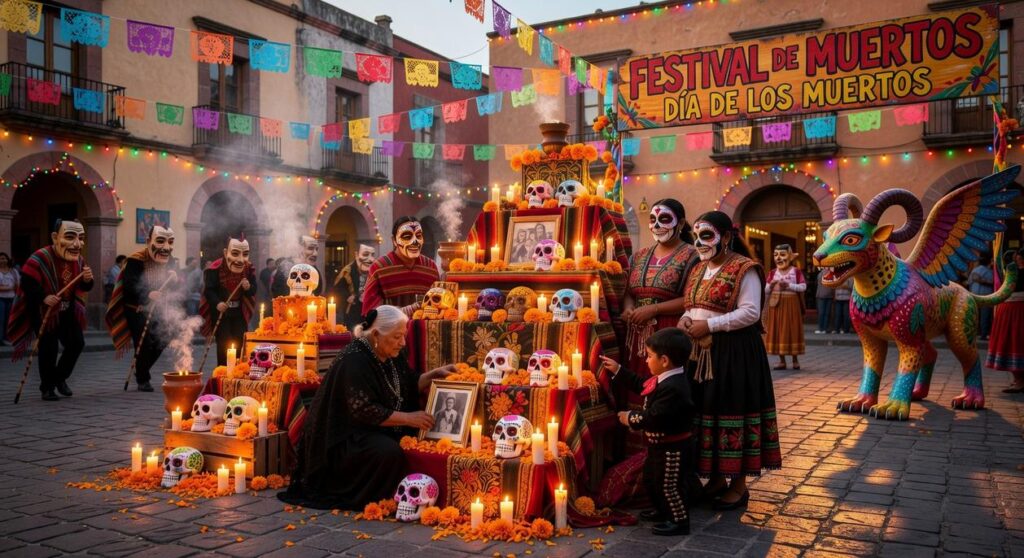
Día de los Muertos is a multi-day Mexican holiday, celebrated from October 31 to November 2, when families believe the souls of their loved ones return for a brief, joyful reunion. Although outsiders sometimes mistake it for a Mexican Halloween, that comparison misses the point. This is not a somber or scary event—it’s a celebration of memory, continuity, and love (think more Coco than horror film).
At the heart of the tradition are ofrendas, or home altars, decorated with marigolds—bright orange flowers believed to guide spirits—alongside photos, candles, and favorite foods of the departed. You’ll also see calaveras (skulls), often made of sugar or clay, symbolizing the sweetness of life and the inevitability of death. Rather than fearing mortality, families embrace it with music, parades, and shared meals.
If you’re planning to attend, I recommend skipping the massive Mexico City parade. Instead, visit smaller towns like Pátzcuaro or Oaxaca, where candlelit cemetery vigils feel intimate and deeply personal. Before you go, read a beginners guide to experiencing indigenous cultures respectfully to ensure you honor local customs thoughtfully.
Among traditional festivals worldwide, few balance joy and remembrance so beautifully.
Songkran in Thailand: The World’s Biggest Water Fight
Every April, Thailand turns into a nationwide splash zone. Songkran marks the Thai New Year, but calling it a “water fight” barely covers it. At its heart, the festival is about renewal. The water symbolizes purification—washing away misfortune and welcoming a clean slate for the year ahead (think spiritual reset button).
Water Fights vs. Sacred Rituals
On one side, you have Bangkok’s Khao San Road: neon shirts, water guns the size of Super Soakers, and crowds moving like a live-action music festival. Chiang Mai offers a similar energy, with its old city moat becoming ground zero for joyful chaos. It’s exhilarating, loud, and a little like stepping into a real-world Mario Kart water level.
On the other side, there’s the traditional celebration. Families visit temples, gently pour scented water over Buddha statues—a ritual called Rod Nam Dam Hua (a gesture of respect)—and pay homage to elders. Compared to the street battles, these moments are calm, reverent, and deeply rooted in values shared by traditional festivals worldwide.
So which should you choose? Ideally, both. Start in Chiang Mai for grand festivities, then take an overnight train north to a smaller village for intimate rituals. Pro tip: pack quick-dry clothing and seal your valuables—no one stays dry.
Naadam Festival in Mongolia: The “Three Games of Men”
Naadam is Mongolia’s most iconic celebration, built around wrestling, horse racing, and archery—skills once essential for survival on the steppe. Officially recognized by UNESCO as Intangible Cultural Heritage in 2010, the festival draws thousands each July, marking Mongolia’s 1921 independence revolution. It is more than sport; it is IDENTITY in motion.
In Ulaanbaatar, the opening ceremony fills the national stadium with over 10,000 spectators, featuring elaborate costumes, throat singing, and military pageantry. Mongolian wrestling has no weight classes and no time limits; the goal is simple—force your opponent to touch the ground with anything other than feet or hands. Horse races stretch up to 30 kilometers, with child jockeys aged 5–13 guiding semi-wild steppe horses across open terrain (a tradition both celebrated and debated). Archery competitions showcase remarkable precision using horn-and-sinew composite bows modeled after those of Genghis Khan’s era.
• Massive stadium ceremonies in the capital
• Long-distance prairie races outside city limits
• Community feasts in open grasslands
Yet statistics show over 70% of Mongolia’s population lives outside the capital, and the countryside Naadam reflects that nomadic heart. Compared with traditional festivals worldwide, its rural editions feel raw and personal—families share airag (fermented mare’s milk), elders judge contests, and victories are communal. Seek a provincial Naadam, and you witness living heritage, not just performance.
From India’s luminous Diwali nights to Mongolia’s thunderous Naadam games, you’ve glimpsed how traditional festivals worldwide carry memory, meaning, and identity. The world can feel vast, its rituals distant, even intimidating. But when you learn the why—harvest, faith, freedom, community—you stop being a spectator and start becoming a respectful participant. Research local customs, dress codes, and taboos before you go. Arrive early, ask questions, support neighborhood vendors, and learn a greeting in the local language (it opens doors). Choose one celebration this year, plan around it, and build your itinerary outward. Which cultural gathering will you experience first? Abroad.
Keep Exploring the World’s Most Vibrant Celebrations
You came here searching for deeper insight into the meaning, history, and atmosphere behind traditional festivals worldwide—and now you have a clearer picture of how these cultural celebrations connect communities, preserve heritage, and create unforgettable travel experiences.
Missing out on authentic cultural moments is one of the biggest travel regrets. It’s easy to visit a destination and only scratch the surface. But when you understand the stories, rituals, and local significance behind these festivals, your journey transforms from ordinary sightseeing into something truly immersive.
Now it’s your move.
Start planning your next trip around one of these incredible celebrations. Map out your route, prepare smart with savvy packing strategies, and seek out those hidden gems most travelers overlook. Don’t let another year pass watching from the sidelines.
Explore our expert travel guides and curated backpacking routes today—and turn your next adventure into a front-row experience of culture in motion.