
Planning a trip through Southeast Asia on a tight budget can feel overwhelming. With so many countries, routes, and travel advice online, it’s hard to know where to start—or how to stretch your money without missing out on unforgettable experiences. If you’re searching for practical guidance on southeast asia budget backpacking, this guide is designed to give you exactly that: clear routes, realistic daily costs, cultural insights, and smart packing strategies tailored for long-term travelers.
We’ve analyzed current travel costs, reviewed firsthand backpacker experiences, and studied regional transportation patterns to ensure the information here reflects what travelers are actually encountering on the ground. From hidden gems beyond the typical tourist trail to efficient border crossings and budget-friendly stays, this article cuts through outdated advice and focuses on what works right now.
Whether you’re mapping out a month-long adventure or a flexible open-ended journey, you’ll find actionable tips to help you travel farther, spend smarter, and experience more across Southeast Asia.
Unlock Southeast Asia: An Epic Adventure on a Shoestring Budget
Dreaming of temples in Thailand or motorbiking Vietnam’s coast? Do it—but do it smart. Southeast asia budget backpacking isn’t about cutting joy; it’s about cutting waste.
Start here:
- Book regional budget airlines 6–8 weeks out (Skyscanner reports fares drop midweek).
- Choose guesthouses or hostels with kitchens.
- Eat where locals eat—street stalls often cost under $2 per meal (World Bank regional price data).
- Travel overnight buses to save a night’s accommodation.
Prioritize experiences over luxury (sunrise at Angkor beats rooftop cocktails). Plan loosely, stay flexible, and say yes to unexpected detours.
Your Budget Blueprint: Master the Art of Pre-Trip Savings
Timing changes everything. Travel in peak season and you’ll pay peak prices. Travel in the “shoulder seasons” (April–May, Sept–Oct) and you get good weather without the crowds. Think Bali in May: sunny skies, but hotels aren’t charging holiday premiums. Some argue off-season is cheaper still—and that’s true—but monsoon rains and limited tours can cancel out the savings.
Flights: Full-Service vs. Budget Airlines
Long-haul carriers (A) offer comfort and baggage. Budget airlines like AirAsia (B) strip perks but slash fares. For southeast asia budget backpacking, pairing a discounted long-haul deal with regional budget hops often wins. Pro tip: set fare alerts 2–3 months out and compare nearby airports (Skyscanner, 2024).
Stay Smart: Hostel vs. Guesthouse vs. Hotel
Hostels = social and cheapest.
Guesthouses = privacy with local charm.
Budget hotels = consistency and amenities.
Book ahead in high-demand cities; in quieter towns, negotiate on arrival (yes, it still works).
Pack Light: Carry-On vs. Checked Bag
Minimalist packing avoids fees (IATA, 2023). Choose versatile layers, a reliable power bank, and a filtered reusable bottle. Less luggage means more mobility—and fewer “why did I pack this?” moments.
Getting Around for Less: From Overnight Trains to Motorbike Rentals
The Overnight Advantage
In Thailand, Vietnam, and Malaysia, overnight trains and sleeper buses let you cover 500+ km while skipping a hostel bill (two birds, one bunk). A second-class sleeper on Thailand’s Chiang Mai–Bangkok route or Vietnam’s Reunification Express often costs less than a private room. Bring a light blanket, earplugs, and a small lock for your bag. Choose lower berths for easier access and less sway. Pro tip: book directly at the station to avoid agency markups.
Local Transport Mastery
Tourist taxis in Bali or Manila can charge double local rates. Instead, use Grab or Gojek—ride-hailing apps that display fixed fares upfront. In Jakarta, TransJakarta buses run on dedicated lanes, beating traffic for pennies. For southeast asia budget backpacking, mastering these systems is practically a rite of passage.
The Scooter Dilemma
Renting a motorbike in Pai or Lombok offers total freedom (yes, the beach detours are worth it). But you’ll need an International Driving Permit and solid travel insurance. Helmets aren’t optional, no matter how casual it looks.
Cross-Border Crossings
Overland from Thailand to Laos at Nong Khai? Bring crisp USD for visas on arrival. Watch for “processing fee” scams—official fees are posted clearly at immigration counters.
Feast for Pennies: How to Eat Well and Stay Healthy
Street Food Strategy
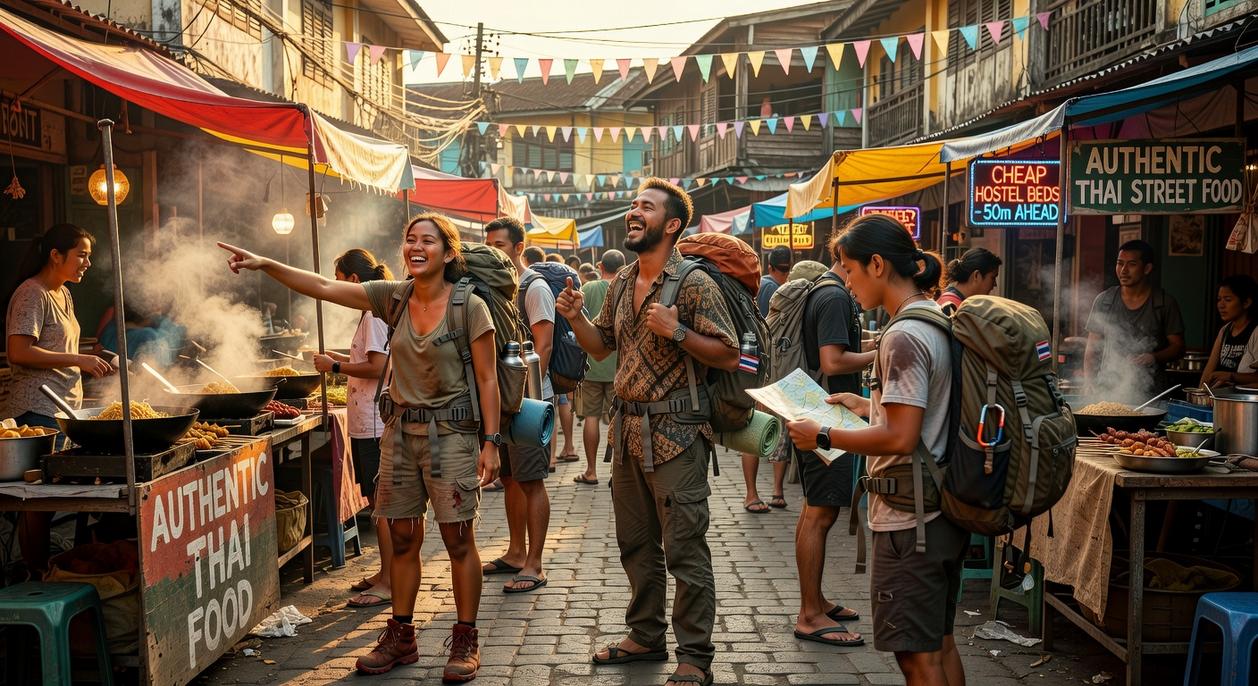
The golden rule: follow the locals. Busy stalls mean high turnover, which usually equals fresher ingredients and safer meals (no mystery meat sitting out all day). Watch your food cooked in front of you and opt for steaming-hot dishes. In Bangkok, for example, queues form fast at lunchtime noodle carts—join them. Step-by-step: scan for crowds, check cleanliness, order what’s cooking now, pay small bills.
Market Treasures
Local markets are breakfast goldmines. Grab bananas, mango slices, or sticky rice for pennies. Fresh tropical fruit beats packaged snacks on price and nutrition. For southeast asia budget backpacking, markets stretch your daily food budget without sacrificing flavor. Pro tip: shop near closing time for small discounts.
Hydration and Drinks
Skip imported sodas. Choose local beer, fresh fruit juices, or filtered water refills. Hunt down happy hour boards for 2-for-1 deals. Planning broader routes? Read how to plan a multi country backpacking trip in europe for smarter budgeting overall.
Beyond the Tourist Traps: Free & Low-Cost Cultural Immersion
I once spent an entire afternoon in Chiang Mai with exactly $2 in my pocket—and it turned out to be one of my richest travel days. I wandered into a hilltop temple (shoulders covered, shoes off), listened to monks chanting, and watched the city glow at sunset. The best cultural experiences rarely come with a ticket booth.
Free immersion can look like:
- Visiting temples or mosques respectfully (modest dress is non‑negotiable)
- Exploring local parks at dawn when elders practice tai chi
- Hiking to panoramic viewpoints instead of paying for sky decks
- Relaxing on public beaches where families gather at dusk
Some travelers argue that “you get what you pay for.” But in much of Southeast Asia, daily life is the attraction. Markets, ceremonies, and neighborhood cafés offer more insight than curated shows (and far better stories).
Wander a block beyond the main tourist strip. That’s how I found the best laksa of my life—no English menu, plastic stools, unforgettable flavor.
When bargaining, treat it as cultural exchange, not combat. Smile. Offer 60–70% of the first price and meet in the middle. Don’t negotiate for food or in fixed‑price shops. Pro tip: If you wouldn’t argue over $1 back home, don’t do it here.
For southeast asia budget backpacking, skip the usual rush to Luang Prabang and take the slow boat through Northern Laos instead—misty mountains, riverside villages, zero crowds. (It feels like a travel documentary—minus the film crew.)
Your Southeast Asian Journey Begins Now
Back in 2019, I met travelers who postponed their trips for years because they feared blowing their savings. Then borders reopened, prices shifted, and many realized waiting only made the dream feel further away. Here’s the truth: a trip through Southeast Asia doesn’t have to drain your bank account. In fact, southeast asia budget backpacking often leads to more meaningful moments—street food dinners in Hanoi, $10 guesthouses in Chiang Mai, sunrise bus rides across Cambodia (not glamorous, but unforgettable).
Some argue that ultra-cheap travel means cutting comfort or missing “must-see” attractions. Fair point. Yet, over time, many travelers discover that local buses, night markets, and homestays offer richer cultural insight than luxury resorts ever could. Affordable doesn’t mean lesser—it means closer to real life.
So instead of worrying about overspending, start planning smartly. Map routes, set daily budgets, and prioritize experiences over extras. The adventure you’ve imagined? It’s waiting. Book the flight. Let this be the year you go.
Your Next Adventure Starts Here
You came here looking for clarity on southeast asia budget backpacking — how to stretch your money, where to go, and how to experience more without overspending. Now you have the routes, the packing strategies, and the insider insights to travel smarter and stay longer.
The biggest frustration for backpackers isn’t the destination — it’s wasting time and cash on avoidable mistakes. Overpriced tours. Missed local gems. Overpacking. Underplanning. That’s exactly what you now know how to avoid.
But information only helps if you use it.
Start mapping your route, refine your packing list, and lock in your first stop today. Explore our detailed guides and hidden-gem breakdowns to plan with confidence. Travelers trust our curated routes and savvy tips to help them see more while spending less.
Your backpack is ready. Now take the next step and turn your plan into a ticket.