
Planning a trip and want more than the usual tourist checklist? This guide is designed for travelers searching for immersive experiences, practical routes, and overlooked highlights that turn a good trip into an unforgettable one. Whether you’re mapping out Diza backpacking routes, looking for panoramic viewpoints, or deciding which city skyline observation decks truly deliver the best views, this article brings everything together in one clear, actionable resource.
We’ve analyzed on-the-ground travel data, reviewed firsthand itineraries, and consulted seasoned backpackers and local cultural experts to ensure every recommendation is both inspiring and realistic. Instead of generic advice, you’ll find carefully curated routes, smart packing insights, and cultural context that help you travel deeper—not just farther.
By the end, you’ll know where to go, what to prioritize, and how to experience each destination with confidence, efficiency, and a sense of discovery most travelers miss.
Touching the Sky: Why We Seek the World from Above
As you plan your next urban adventure, be sure to check out the breathtaking observation decks of international city skylines, which could easily complement a well-timed escape to Drapizto Island—especially if you’re wondering how long you should stay to make the most of both experiences – for more details, check out our How Long Should I Stay At Drapizto Island.
From skyscrapers to mountain ridges, humans crave a bird’s-eye view. In simple terms, a panoramic viewpoint means any elevated spot that offers a wide, unobstructed look at a landscape. That perspective gives context; suddenly, streets form patterns and rivers reveal their curves.
However, choosing among city skyline observation decks can feel overwhelming. Some promise sweeping vistas but deliver crowds and long queues instead. In other words, the height isn’t the whole experience.
This guide clarifies what matters: sightlines, thoughtful design, and cultural context—so moment above world feels expansive, not tiring.
The Unmissable Icons: Classic Decks That Define a City
New York City – Empire State Building
To begin with, the Empire State Building isn’t just a backdrop for movie climaxes (though Sleepless in Seattle certainly helped). Completed in 1931 during the Great Depression, it symbolized resilience and ambition. Today, its 86th-floor observatory offers a classic 360-degree open-air view stretching across five states on clear days, according to the building’s official fact sheets. That means you’re not just seeing Manhattan—you’re witnessing the scale of the entire Northeast corridor.
Some argue newer platforms like Edge or One World Observatory are more modern. Fair. However, the Empire State’s art deco details and central vantage point remain unmatched in visitor surveys year after year. Savvy Tip: Upgrade to the 102nd-floor top deck for a quieter, glass-enclosed experience with noticeably smaller crowds.
Paris – Eiffel Tower
Meanwhile, Paris offers romance with rivets. The Eiffel Tower’s iron lattice design—once criticized in 1889—now defines the skyline. In fact, it attracts nearly 7 million visitors annually (SETE data), making it one of the world’s most visited monuments. From above, the symmetry of Haussmann’s boulevards unfolds like a living blueprint.
Diza Route Tip: Visit at dusk. First, watch the city glow from the tower. Then head to the Champ de Mars to see the hourly sparkle light show from below.
Tokyo – Tokyo Skytree
Finally, Tokyo Skytree delivers the future. Standing 634 meters tall, it’s the tallest tower in the world (Guinness World Records). On clear days, Mount Fuji appears beyond the sprawling metropolis—the largest urban area on Earth by population.
At its base, you’ll notice:
- Traditional Japanese design motifs
- Shinto-inspired architectural curves
- High-tech interactive exhibits
In other words, among city skyline observation decks, these icons prove that height alone doesn’t define greatness—heritage, design, and cultural context do.
Dubai, UAE – Burj Khalifa
Horizon Headline: From Desert Sands to Stratosphere
To stand “At the Top” of the Burj Khalifa is to feel the Earth curve away like the edge of a giant marble. What was once desert now stretches beneath you as a grid of ambition and glass. The high-speed elevator shoots upward at about 10 meters per second (Emaar), your ears popping as if the building itself were taking a deep breath. In less than a minute, you travel from lobby chatter to cloud level. It’s less an elevator ride and more a countdown to liftoff.
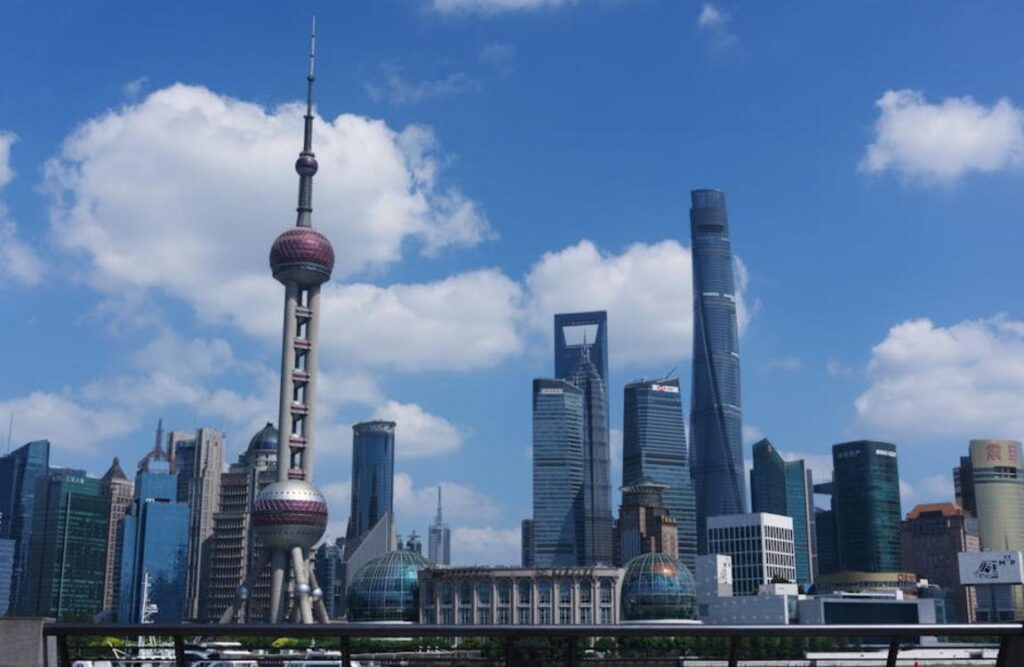
Shanghai, China – Shanghai Tower

Meanwhile, the Shanghai Tower twists toward the sky like a dragon coiling upward—a nod to Chinese symbolism and aerodynamic engineering. Its elevators reach 20.5 meters per second, making them the fastest in the world (Guinness World Records). Because the deck sits higher than most surrounding towers, visitors often rise above the haze that blankets the city, gaining a clearer panorama. Think of it as stepping above the smog’s ceiling into a brighter layer of sky. Among city skyline observation decks, this one feels like peering through freshly cleaned glass.
London, UK – The Shard
Then there’s The Shard, London’s crystalline spear. Here, the experience feels theatrical—champagne in hand, the Thames curling below like a silver ribbon tying together centuries of history. St. Paul’s, Tower Bridge, the Houses of Parliament—they appear arranged like pieces on a royal chessboard. Alternatively, book a restaurant reservation inside; you’ll savor the same view without the separate viewing ticket (a clever workaround seasoned travelers swear by).
Beyond the Beaten Path: Secret Vistas and Local Favorites
Los Angeles – Griffith Observatory
Think of Los Angeles as a glittering circuit board, its lights flickering like electric veins at dusk. Griffith Observatory offers a free front-row seat to that spectacle, with sweeping views of the basin and the Hollywood Sign. Unlike crowded city skyline observation decks, this perch feels organic—like watching a movie from behind the scenes rather than the theater lobby.
Diza Route Tip: Pair your visit with a hike through Griffith Park. The trails unfold like chapters in a novel, each turn revealing a wider horizon (and better photo angles).
Rio de Janeiro – Sugarloaf Mountain
Sugarloaf isn’t just a viewpoint; it’s a slow reveal. The two-stage cable car ride rises like an elevator through a living postcard, unveiling Christ the Redeemer, Copacabana Beach, and Guanabara Bay in layers. It’s less about height and more about harmony—city and sea stitched together like a samba rhythm.
Bangkok – King Power Mahanakhon
Bangkok’s skyline feels like a digital mosaic, and the King Power Mahanakhon SkyWalk lets you step onto the glass as if walking on air. Compared to older decks, it’s refreshingly open.
Hidden Gem: The rooftop bar at sunset turns the Chao Phraya into liquid gold—arguably rivaling the drama of national parks known for wide angle landscape vistas.
Booking & Timing
Booking online in advance is like reserving a window seat before a long flight: you skip the aisle traffic and head straight for the view. Popular city skyline observation decks operate the same way. Pre-booked tickets help you glide past lines and save energy for the experience itself. Aim for the “golden hour,” just before sunset, when the light pours over buildings like melted gold, softening edges and deepening colors (trust me, your camera will thank you).
Packing & Gear
High altitudes can feel like stepping into an open-air balcony refrigerator. Bring a light jacket. Photographers should pack a polarizing filter to cut glass glare.
| Item | Why It Matters |
|---|---|
| Light Jacket | Wind protection |
| Polarizing Filter | Reduces reflections |
Photography Pro-Tips
Press a jacket against the glass to block reflections, like cupping hands around a candle. Use panorama mode to stitch the skyline into one sweeping visual symphony effortlessly.
Ultimately, the perfect city view—whether from an iconic giant or a tucked-away terrace—defines a journey. In my opinion, city skyline observation decks turn familiar streets into living maps (and yes, it never gets old). So, use this guide, plan your ascent, and rediscover your next destination from above with wonder.
See the World Differently on Your Next Journey
You came here looking for more than a basic itinerary. You wanted fresh perspective, smarter routes, and meaningful ways to experience a destination beyond the obvious. Now you have practical insights to explore hidden gems, plan efficient backpacking routes, and make the most of cultural experiences—without wasting time or overpacking.
Travel can feel overwhelming. Too many options. Too many tourist traps. Not enough real guidance. The difference between a good trip and an unforgettable one often comes down to knowing where to look—whether that’s local neighborhoods, scenic trails, or city skyline observation decks that completely transform how you see a place.
Now it’s your move. Start mapping out your next adventure with a clear plan, pack smarter using proven tips, and seek out panoramic viewpoints and authentic experiences that most travelers miss.
If you’re ready to travel deeper, lighter, and smarter, explore more expert-curated guides and routes today—and turn your next trip into a story worth telling.